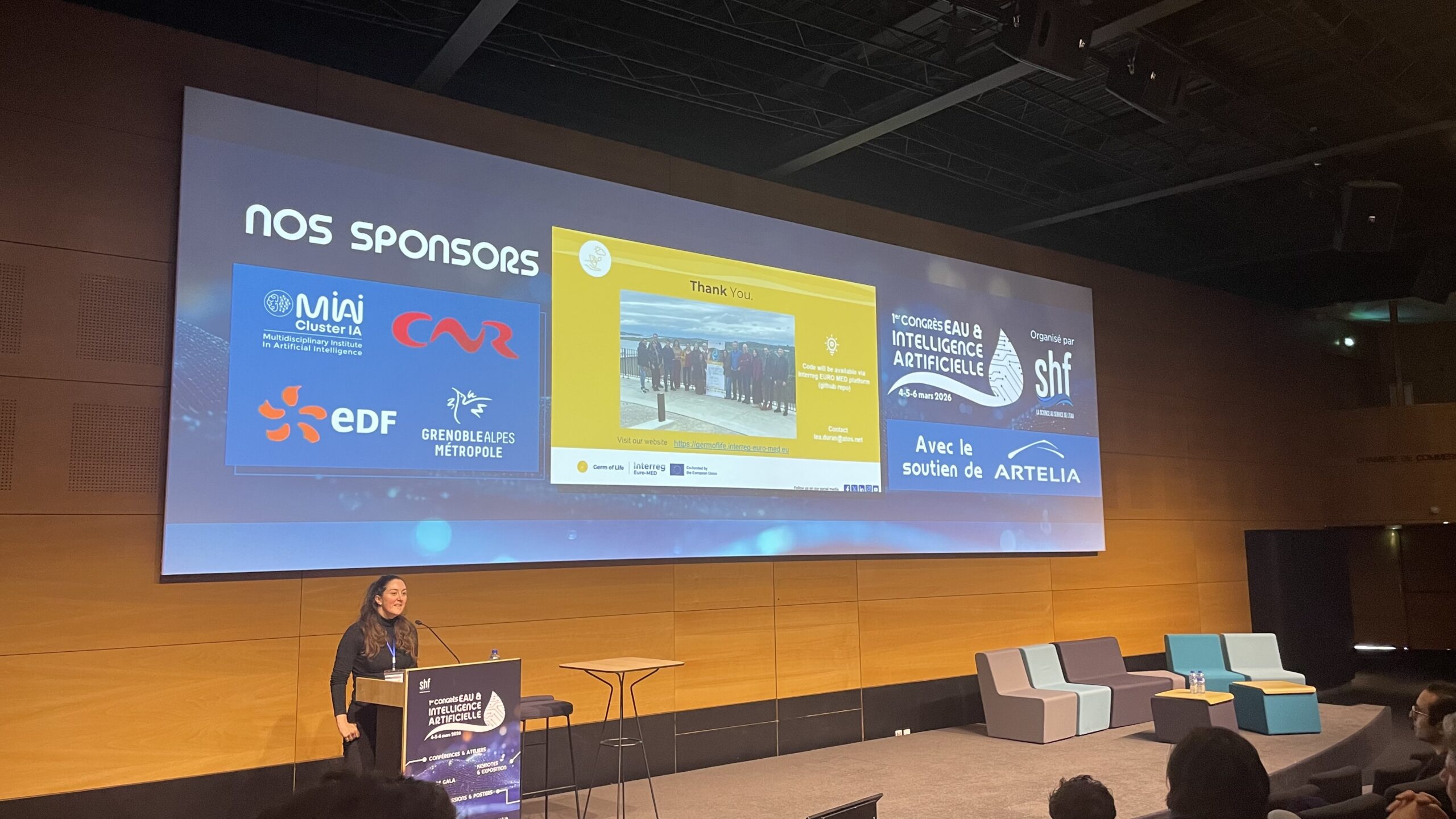

Léa Duran, Data Scientist at Atos, took part in the first edition of the “Water & AI” congress (Congrès Eau IA), held in Grenoble, France, from 4 to 6 March. During this scientific event, Duran presented some of the most recent advances of the European project Germ of Life, which focuses on improving the capacity to anticipate and manage drought events in the Mediterranean region.
The congress, organised by the Société Hydrotechnique de France (SHF), brought together researchers, technology specialists and professionals from the water sector to explore how artificial intelligence can help better understand today’s water and climate challenges.
During her presentation, Duran explained how the Germ of Life project is developing new tools to analyse and forecast drought situations by combining climate data, satellite information and artificial intelligence models. The aim is to build systems capable of monitoring how drought conditions evolve over time and anticipating possible future scenarios.
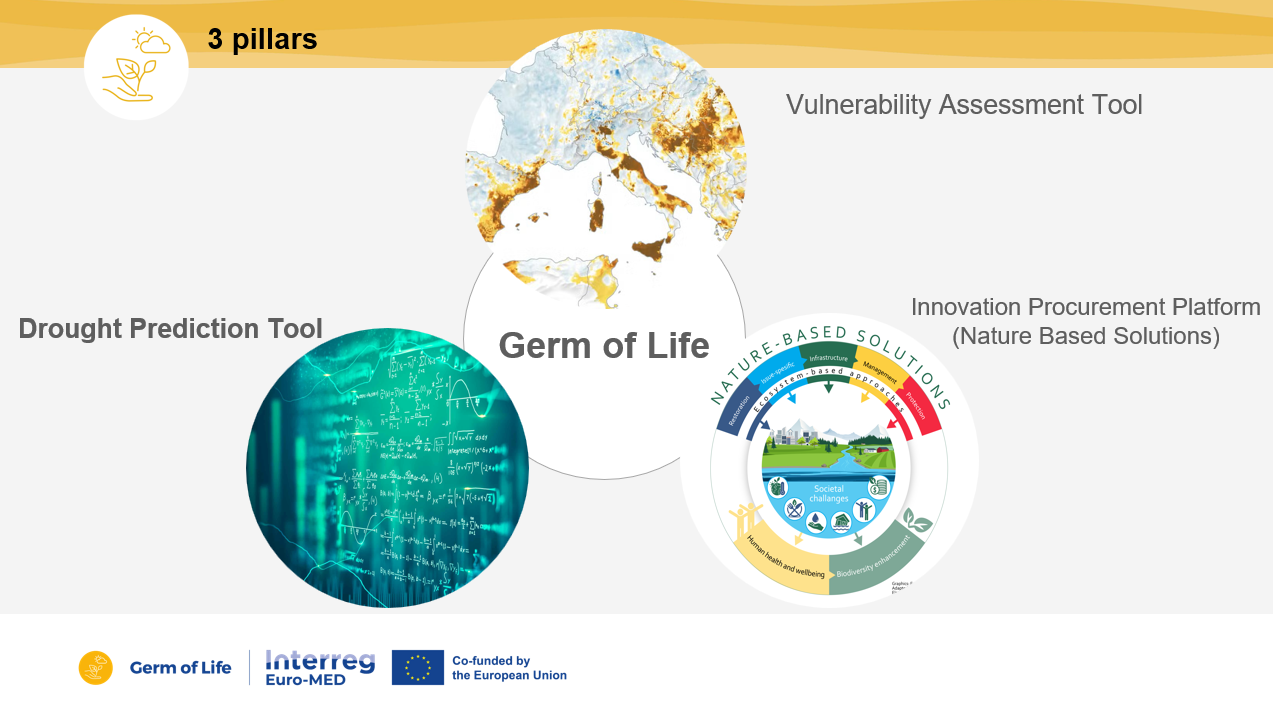
In this context, the Germ of Life team prepared a scientific publication presented at the congress which highlights some of the project’s key advances. The work was carried out by researchers Léa Duran, Amine Chemchem and Valentin Duperron (Atos, Innolab de Montpellier), in collaboration with Valeria Gentile, Odunayo David Adeniyi and Manuela Balzarolo from the Euro-Mediterranean Center on Climate Change (CMCC), as well as Michael Samouris and Athanassios Argiriou from the Laboratory of Atmospheric Physics at the University of Patras, the latter being the coordinator of the Germ of Life project.
The publication presents the development of models designed to analyse the state of vegetation and its response to water stress, as well as the combination of different indicators to provide a more comprehensive view of drought risk.
One of the most relevant outcomes is the creation of a new indicator, the Drought Hazard Index (DHI), which integrates different climate and environmental data to provide a more accurate assessment of drought conditions. This approach helps to better understand how these phenomena affect different Mediterranean ecosystems.
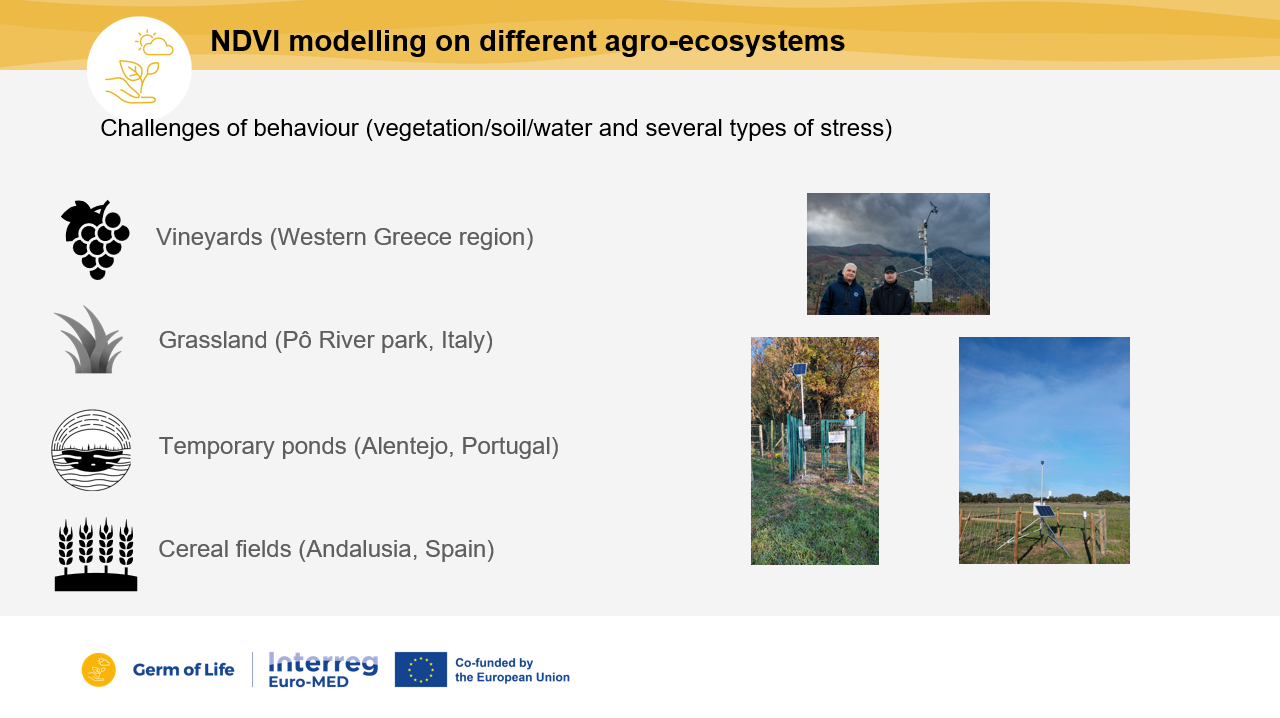
The methodology developed within the project is currently being tested in several pilot territories representing the diversity of Mediterranean landscapes, including vineyards in Greece, grasslands in Italy, temporary ponds in Portugal and agricultural fields in Spain. These case studies help validate the tools and explore how they can contribute to improved water management and climate change adaptation.
Participation in this congress provided a valuable opportunity to share these advances with the international scientific community and to continue fostering knowledge exchange on the use of digital technologies to address one of the major environmental challenges of our time: drought.